• Skip to primary navigation
  • Skip to main content
  • Texas A&M Forest Service
  • Texas A&M Veterinary Medical Diagnostics Laboratory
  • Texas A&M AgriLife Extension Service
  • Texas A&M AgriLife Research
  • Texas A&M College of Agrculture and Life Sciences
Cypress Basin Master Gardeners Association
Cypress Basin Master Gardeners AssociationCBMGA is an educational and volunteer program offered through the A&M AgriLife Extension of the Texas A&M University System.

Other Horticultural Events

  • Menu
  • Welcome to CBMGA.ORG-Your Plant Information Place
  • About Us
    • Our Mission
    • Our Location
    • TOUR OUR GARDENS-VIRTUALLY
    • CBMGA Photo Archive
    • Who Are Master Gardeners
    • How Can I Become a Master Gardener?
    • Volunteer Commitment
    • History of TMG
    • Texas Master Gardeners Program
  • Calendar
    • January 2026
    • February 2026
    • March 2026
    • April 2026
    • May 2026
    • June 2026
    • July 2026
    • August 2026
    • September 2026
    • October 2026
    • November 2026
    • December 2026
  • Resources
    • Texas A&M Aggie Horticulture
    • Texas Master Gardener Association
    • Titus County Extension
    • Earth-Kind® Gardening
    • Gardening by the Month
    • Texas Plant Disease Diagnostic Lab
    • Soil Testing
    • Knowledge Pages
      • Vegetables and Gardening
        • Vegetables
        • Herbs
        • No Dig Vegetable Gardens
        • Food Preservation
      • Insects and Butterflies
        • Insects
        • Butterflies
        • Fire Ants
      • Water Literacy
        • EarthKind Landscaping
        • Rain Water Harvesting
        • ARWCA-RainWater Capture
        • Tx Water Dev Brd
    • Our Newsletter (currently inactive as of 2024)
    • Our Youtube
  • Ask a ???
  • Members Only
  • MG Training
  • Plant Sale

Narcissus – Rip van Winkle

Narcissus - Rip van Winkle

Genus:
Cultivar:
Family:
Nickname:
Bulbs per sq. foot:
Soil Moisture:
Zones:
Bloomtime:
Color:
Sun:
Height:
Pests:
Moisture:
Narcissus
Rip van Winkle
Amaryllidaceae
Daffodil
10 to 15
average
4, 5, 6, 7, 8
Early to Mid Spring
Yellow
Full Sun
0″ – 6″, 7″ – 12″
Pest Resistant
Average
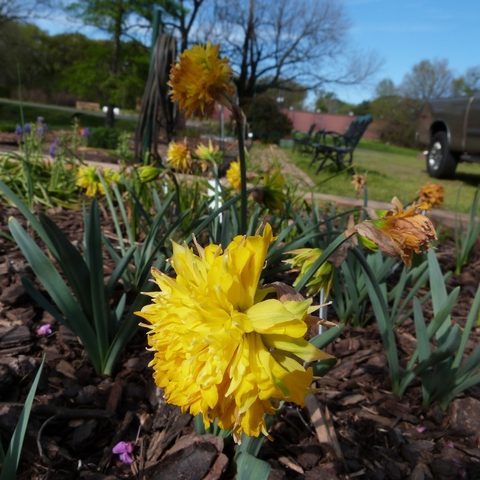
Rip van Winkle -(pumilis plenus) double; variable, old fashioned yellow flower that resembles a dandelion; all yellow with green segments interspersed; Heirloom; 1884; 5″-8″; early-midseason;
Daffodils are the most cost effective, pest-free perennial plants available and make wonderful companions with other bulbs, perennials, annuals and flowering shrubs. They grow in almost all areas of the United States as long as there is a discernible winter. They are pest-free and when given ample sunlight, water and proper nutrition, will provide early spring color for many years. They are divided into 13 divisions according to their flower shape and heritage. Daffodils should be planted in full sun or at least 6 hours a day of sunlight after the leaves are on the trees and should be planted 3x the height of their bulb deep (3″-8″). MINIATURE DAFFODILS – not a separate division, but those cultivars that are about 6″ tall or less. Most on our list are approved by the American Daffodil Society as being appropriate for the miniature list. (Note: climate, soil and site conditions will sometimes encourage some miniatures to grow over or under the normal 6 inches.
Information on this page is generally from Missouri Botanical Gardens,
Dave’s Garden, All things Plants, Texas Superstar, Garden.org or Aggie Horticulture

This page last updated or reviewed [210723-250914]

Texas A&M AgriLife Extension Service
Texas A&M University System Member
  • Compact with Texans
  • Privacy and Security
  • Accessibility Policy
  • State Link Policy
  • Statewide Search
  • Veterans Benefits
  • Military Families
  • Risk, Fraud & Misconduct Hotline
  • Texas Homeland Security
  • Texas Veterans Portal
  • Equal Opportunity
  • Open Records/Public Information