| Common Name: Type: Family: Native Range: Zone: Height: Spread: Bloom Time: Bloom Description: Sun: Water: Maintenance: Suggested Use: Flower: |
sorrel Herbaceous perennial Oxalidaceae Paraguay, Bolivia, Argentina 7 to 10 0.50 to 0.75 feet 0.50 to 0.75 feet June to September Mauve pink Full sun to part shade Medium Medium Ground Cover, Herb, Naturalize Showy |
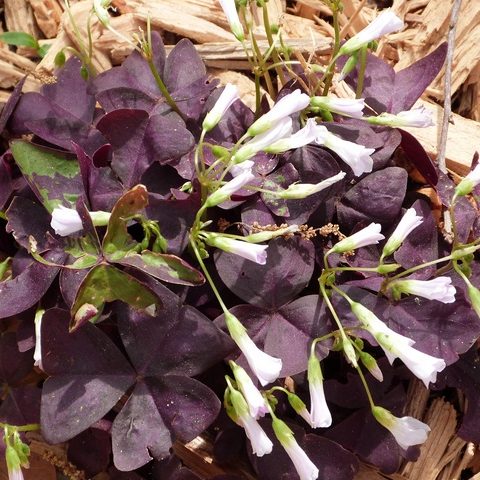
Winter hardy to USDA Zones 7-10 where these plants are easily grown in average, medium moisture, well-drained soils in full sun to part shade. Plants will spread by rhizomes to form colonies in optimum growing conditions. However, they are less aggressive spreaders than some other species in this genus. Plants are best sited in locations that provide some afternoon protection from the hot sun. They will not grow in shade. Keep soils uniformly moist during the growing season. Begin to taper off watering in late summer as the foliage begins to decline. Tolerates poor soils. Plants are not winter hardy to the St. Louis area where they could be grown in pots or containers that can be overwintered indoors in a cool dry location. Oxalis articulata, known by a variety of common names including pink sorrel, pink wood sorrel or windowbox wood sorrel, is an herbaceous perennial that typically grows to 8” tall. It is native to South America (Brazil, Argentina, Paraguay and Uruguay), but has been introduced with subsequent naturalization occurring in many other parts of the world including Australia, Europe and North America (southeastern U.S. and California). It is noted for producing a showy bloom of 5-petaled bright mauve pink flowers (to 3/ 4” across) with darker pink throats somewhat continuously throughout the year in warm winter climates but from June to September in cool weather climates near the northern edge of its growing range. Flowers bloom in 5-10 flowered umbellate cymes above trifoliate leaves each of which has three rounded clover-like gray-green leaflets. Leaves contain oxalic acid. Subsp. rubra has red to pink flowers in 6-12 flowered umbellate cymes. Synonymous with Oxalis rubra Genus name comes from the Greek word oxys meaning acid, sour or sharp in reference to the taste of the leaves. Specific epithet means jointed in reference to the rhizomes. No serious insect or disease problems. Susceptible to rust. Leaves and flowers are an interesting addition to salads. |
| Information on this page is generally from Missouri Botanical Gardens, Dave’s Garden, All things Plants or Texas Superstar |