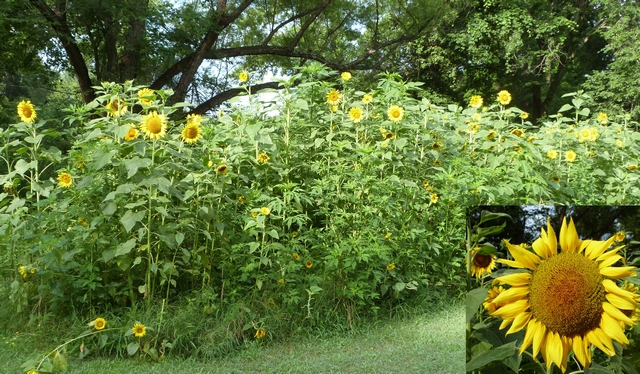
| Common Name: Type: Family: Native Range: Zone: Height: Spread: Bloom Time: Bloom Description: Sun: Water: Maintenance: Suggested Use: Flower: Attracts: Tolerate: |
sunflower Annual Asteraceae United States and Central America 2 to 11 3.00 to 10.00 feet 1.50 to 3.00 feet July to August Yellow, bicolor/dark center disk Full sun Dry to medium Low Annual, Naturalize Showy Birds, Butterflies Deer, Drought, Dry Soil |
Annual. Easily grown in average, moist, well-drained soils in full sun. Tolerates poor soils that are on the dry side. Plant seed in the garden after last frost date. Plants grow so rapidly that there is little reason to start seed indoors. Taller varieties should be sited in locations sheltered from strong winds. Plant foliage often depreciates as the summer progresses. Removal of browned and tattered plants from the garden after bloom may improve the appearance of the landscape, but is a great disappointment to local bird populations that love to feed on the seeds. If the plants must come down, consider saving the seed heads for feeding the birds in winter. Harvest seed from favorite plants for use the following year (some cultivars will not reliably come true from seed however). Helianthus annuus is native to dry plains, prairies, meadows and foothills in the western U. S., Canada and northern Mexico. It is a coarse, hairy, leafy, fast-growing annual that typically grows 5-10’ tall on stiff upright stalks. The species is a somewhat weedy plant that is now commonly seen growing along roads, fences, fields and in waste areas west of the Mississippi River and is the state flower of Kansas. It is native to Missouri, primarily in the northern part of the State. Species plants feature 3-6” wide sunflowers with orange-yellow rays and brown to purple center disks. Flowers bloom in summer. Extensive crossing and hybridizing have resulted in a large number of cultivars that greatly expand the range of flower colors (ray flowers in bright and pastel shades of yellow, red, mahogany, bronze, white and bicolors) and flower head shapes (short rays, long rays, some doubles). Dwarf varieties (1-3’ tall) and mammoth varieties (to 15’ tall) are also available. Flower heads on mammoth varieties can reach 12” in diameter. Disk flowers give way to the familiar sunflower seeds. Large, ovate to triangular, sandpapery leaves to 12” long. Sunflowers have become very popular commercial cut flowers throughout the world. Cultivated varieties are also commercially grown for their edible seeds which are used inter alia in livestock feed, as birdseed and for cooking oils. Flower heads tend to follow the path of the sun each day from morning to night, hence the common name. Rust, leaf fungal spots and powdery mildew are somewhat common. Caterpillars and beetles often chew on the foliage. Larger varieties often need staking, particularly if grown in exposed locations. Specimen or mass. Borders, cottage gardens, bird gardens, wildflower or native plant gardens. Large varieties for border rears or backgrounds. Dwarf varieties for beds, border fronts or containers. |
| Information on this page is generally from Missouri Botanical Gardens, Dave’s Garden, All things Plants or Texas Superstar |
This page last updated or reviewed 210701